Applications
Applications give users access to a single server in their web browser, without connecting to a whole network. For example, you can let the Finance team open one Windows desktop over RDP, or let contractors reach an internal wiki, without installing the Vipilink agent.
Vipilink supports these protocols:
| Protocol | Use it for |
|---|---|
| RDP | Windows desktops and servers. |
| SSH | Linux servers and network devices. |
| VNC | Remote desktops, for example a Mac or Linux desktop. |
| HTTP and HTTPS | Internal websites and web apps. |
Go to Applications → Applications to see your applications.
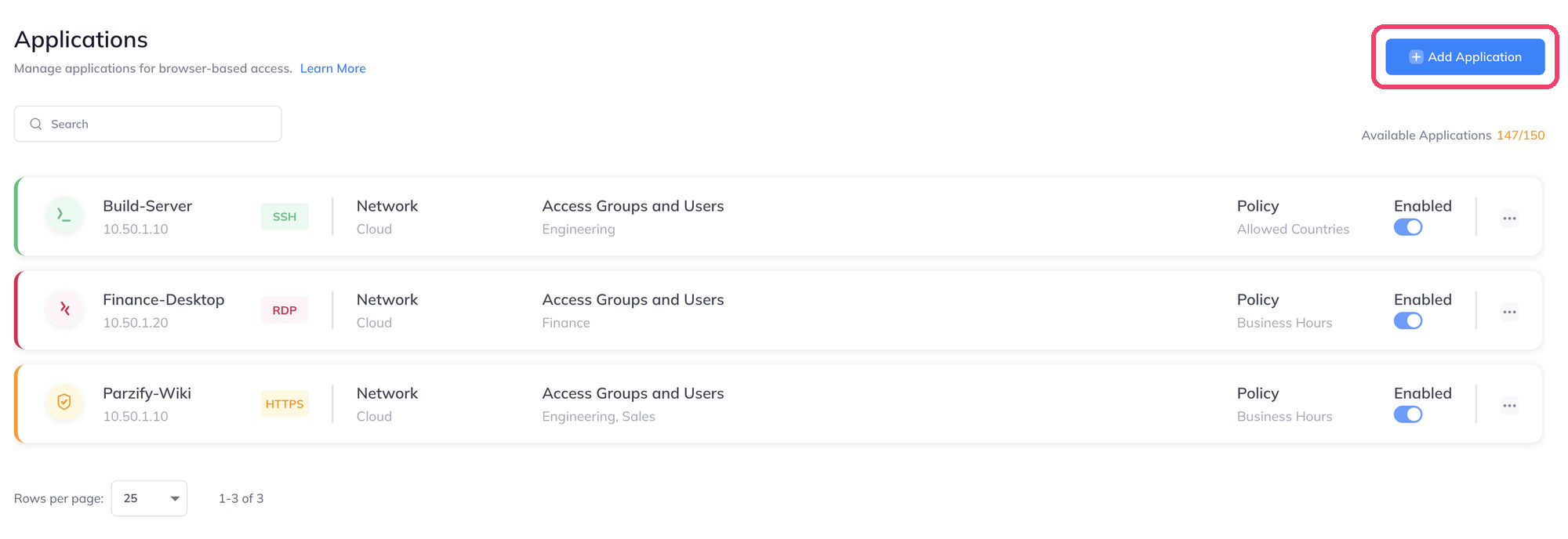
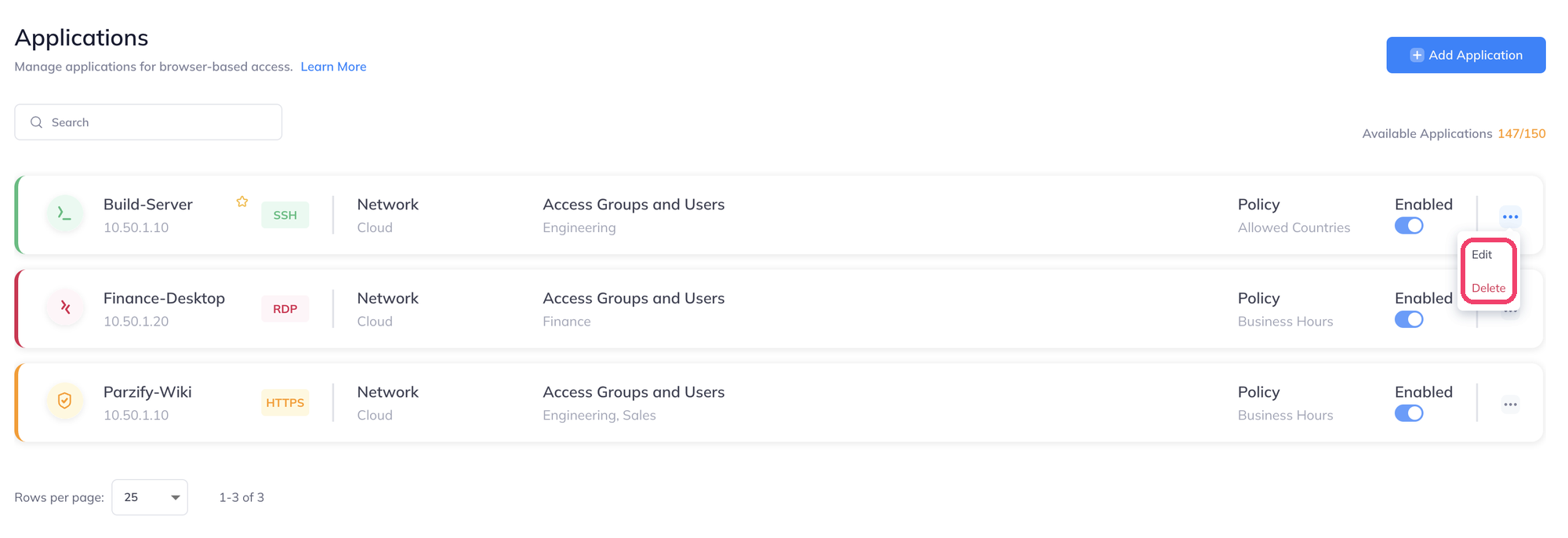
Each row shows the application's host, protocol, network, the groups and users that can open it, and its policy. Available Applications shows how many more you can add. Use the Enabled switch to turn an application off without deleting it. The ... menu has Edit and Delete.
Add an application
- Click Add Application.
-
Fill in General Settings:
Field What to enter Application Name The name users see, for example Finance-Desktop.Protocol RDP, SSH, VNC, HTTP or HTTPS. Can't be changed later. Icon Optional. Click to pick an icon. Host The private IP or host name of the server, for example 10.50.1.20.Port The server port. The usual ports are 3389 for RDP, 22 for SSH, 5900 for VNC, 80 for HTTP and 443 for HTTPS. Network The Vipilink network that can reach the server, usually through a tunnel. Can't be changed later. Max. # of Connections How many sessions can be open at the same time. -
Fill in the settings for the protocol. See below.
- In Access Groups and Members, choose the groups and users that can open the application.
- Optional: in Policy, choose an application policy, for example to allow access only during business hours.
- Click Apply.
After you save, the FQDN field shows the address Vipilink created for the application. Click the copy icon to copy it.
Create an RDP application
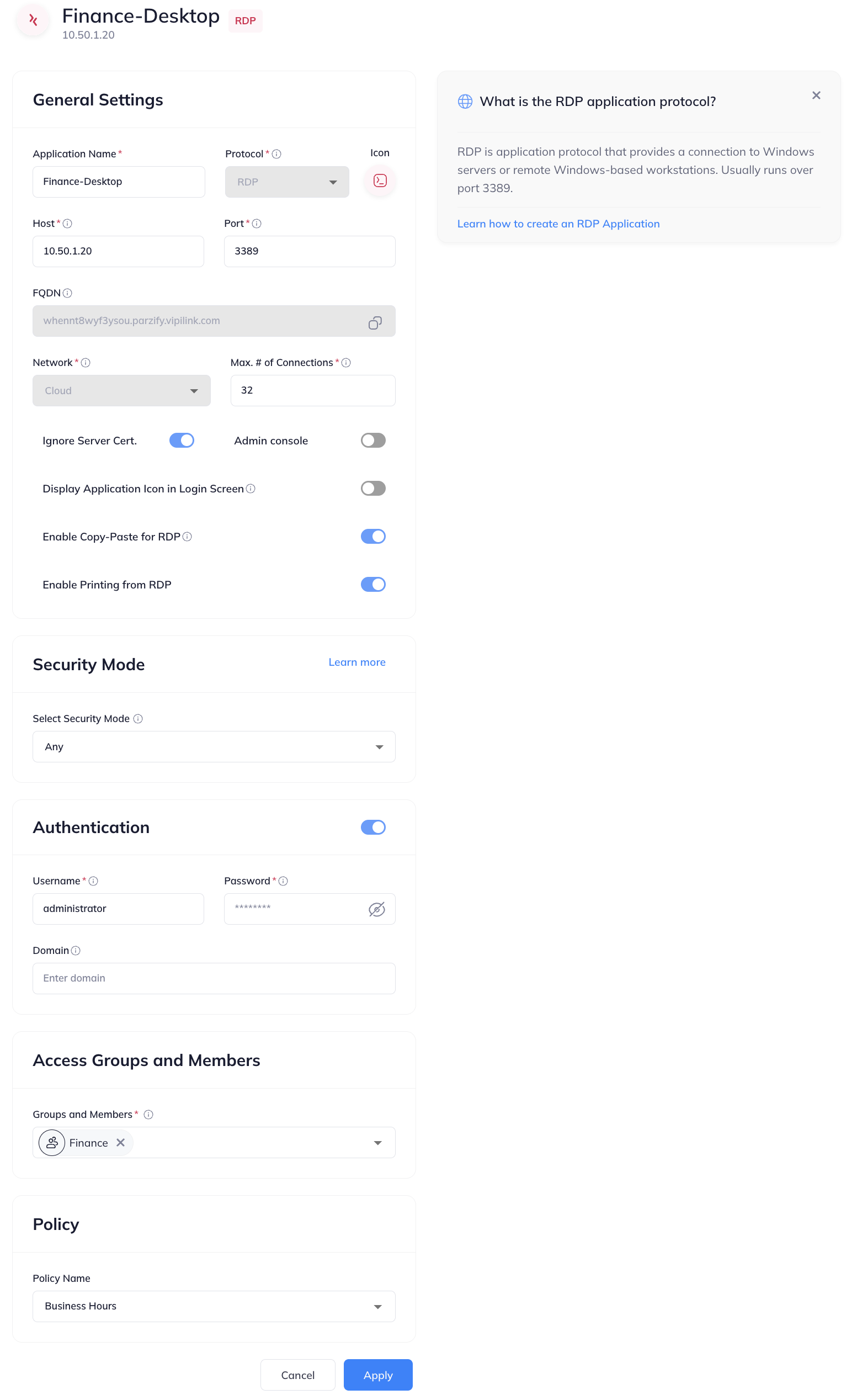
| Setting | What it does |
|---|---|
| Ignore Server Cert. | Connects even if the server's certificate isn't trusted, for example a self-signed one. On by default. |
| Admin console | Connects to the server's admin console session. |
| Display Application Icon in Login Screen | Shows the application's icon on the sign-in screen. |
| Enable Copy-Paste for RDP | Lets users copy and paste between their computer and the remote desktop. |
| Enable Printing from RDP | Lets users print from the remote desktop. |
Security mode
The security mode decides how the connection to the server is encrypted and how users are checked. Keep Any unless the server needs a specific mode.
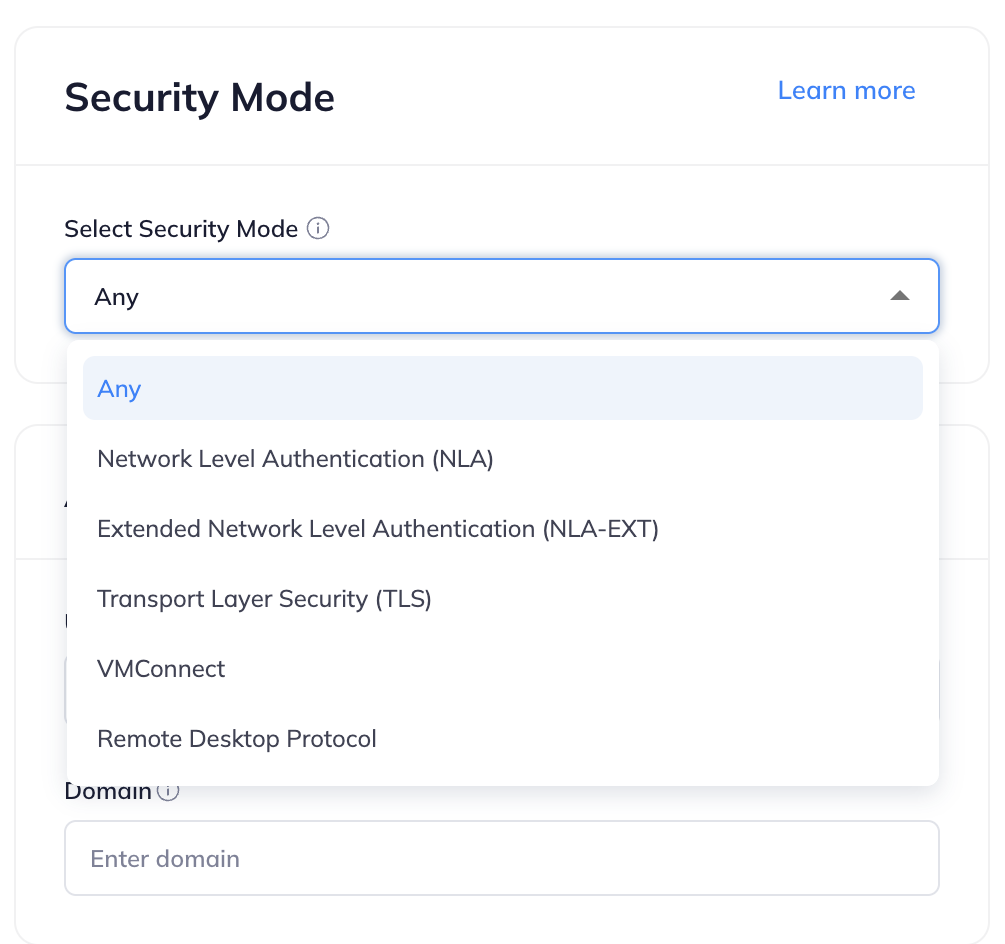
| Mode | When to use it |
|---|---|
| Any | Vipilink and the server agree on the best mode. The default. |
| Network Level Authentication (NLA) | The server requires NLA, the default on current Windows versions. |
| Extended Network Level Authentication (NLA-EXT) | The server requires extended NLA. |
| Transport Layer Security (TLS) | The server requires TLS without NLA. |
| VMConnect | Connecting to a Hyper-V virtual machine console. |
| Remote Desktop Protocol | Older servers that only support standard RDP security. |
Authentication
Turn on Authentication and enter a Username, Password and, if the server is in a Windows domain, a Domain. Vipilink then signs users in to the server with these credentials. Leave it off if each user should sign in with their own account.
Create an SSH application
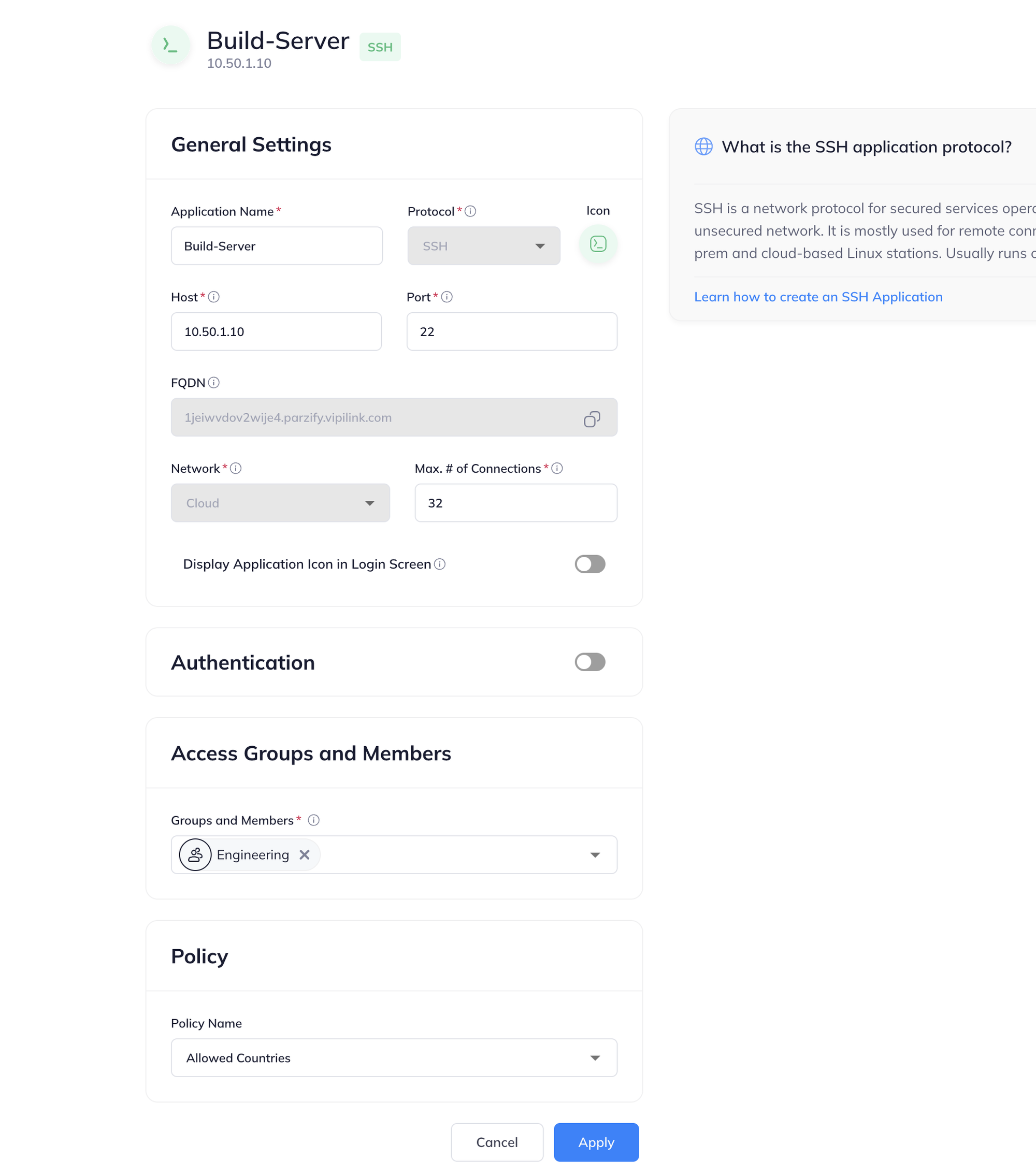
SSH has the general settings and Display Application Icon in Login Screen. Turn on Authentication to store the credentials Vipilink uses to sign in to the server.
Create a VNC application
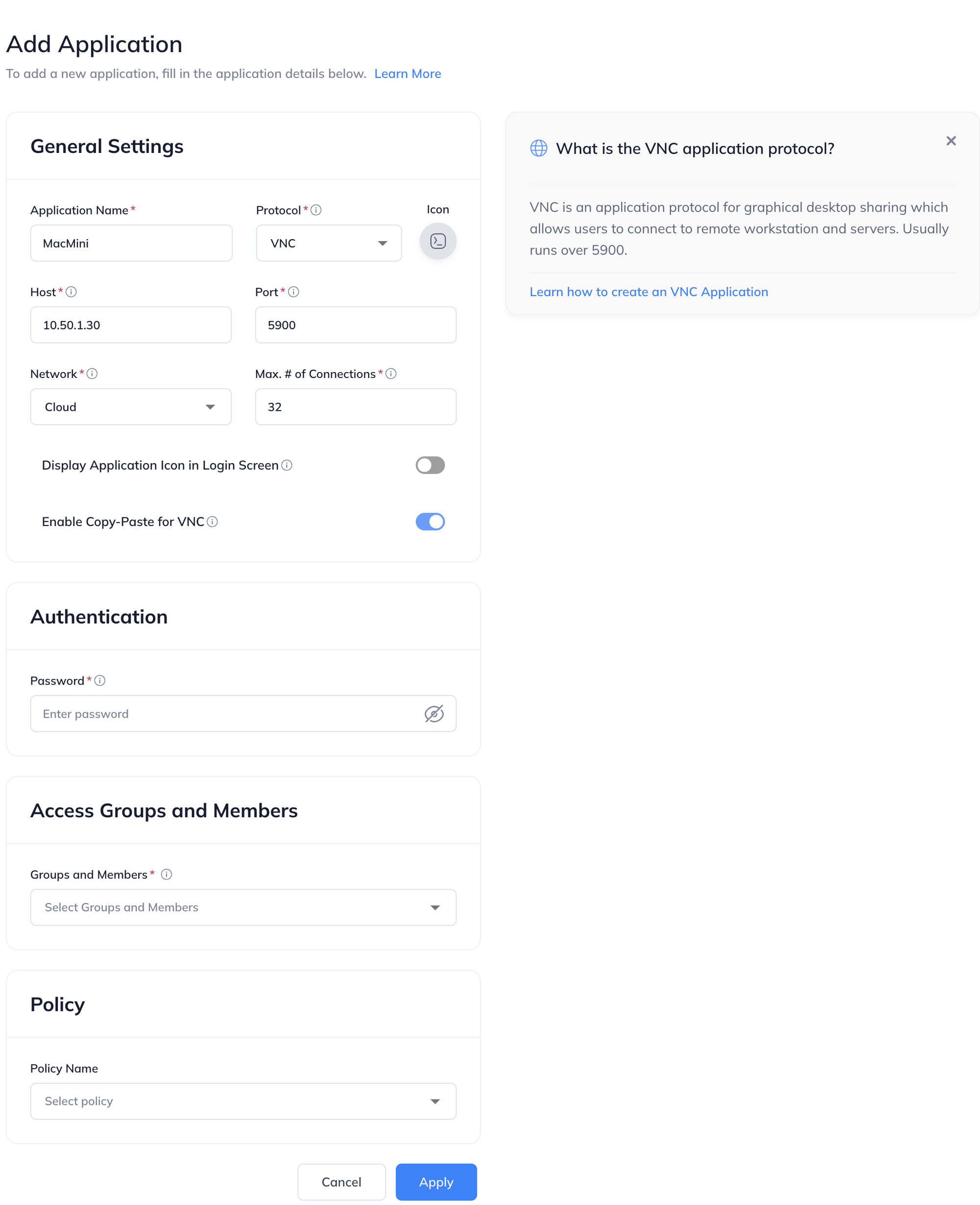
| Setting | What it does |
|---|---|
| Enable Copy-Paste for VNC | Lets users copy and paste between their computer and the remote desktop. |
| Password | The VNC password of the server. |
Create an HTTPS application
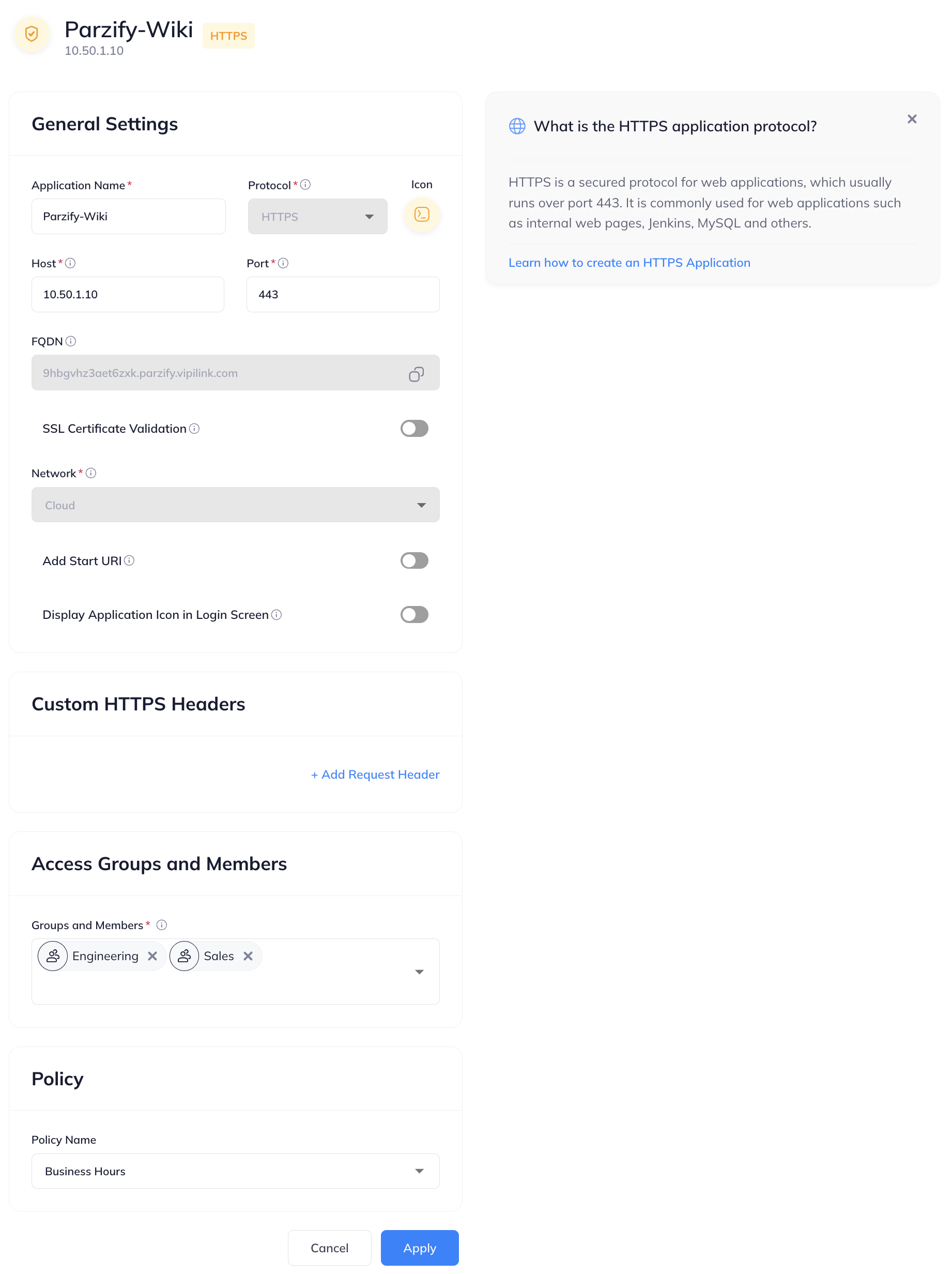
| Setting | What it does |
|---|---|
| SSL Certificate Validation | Checks the server's certificate. Leave it off if the server uses a self-signed certificate. |
| Add Start URI | Opens a specific page of the site, for example /login, instead of the home page. |
| Display Application Icon in Login Screen | Shows the application's icon on the sign-in screen. |
| Custom HTTPS Headers | Click + Add Request Header to add HTTP headers to every request, for example headers the web app needs. |
How users open applications
When users sign in to Vipilink, they see the applications assigned to them under Applications in the menu. Users with the User role see two menu items: Applications and Downloads.
Edit or delete an application
In the application's ... menu, click Edit or Delete. Protocol and Network can't be changed after the application is created.